IoT-based solar performance monitoring for a multi-storey building, integrating environmental sensors, DGs, and inverters on a single dashboard to enable real-time visibility, alerts, analysis, and energy optimization.
The Challenge
The client operated a multi-storey building equipped with a rooftop solar power system supported by diesel generators (DGs) and inverters for backup and load balancing. While solar generation was active, the client lacked a centralized system to monitor environmental conditions that directly impact solar performance, such as temperature, humidity, solar radiation, wind speed, and wind direction. In addition, critical electrical data from DGs and inverters was being monitored locally and independently, making it difficult to correlate solar performance with backup power usage and environmental conditions. Data was scattered across multiple systems, with no unified platform for real-time monitoring, historical analysis, or reporting. The absence of a consolidated dashboard also meant: Limited visibility into real-time system performance No automated alerts for abnormal conditions Manual effort required for data collection and reporting Difficulty in analyzing trends and optimizing energy usage The client required a single, reliable monitoring solution that could integrate all sensors and power systems while providing actionable insights through an intuitive dashboard.
Our Solution
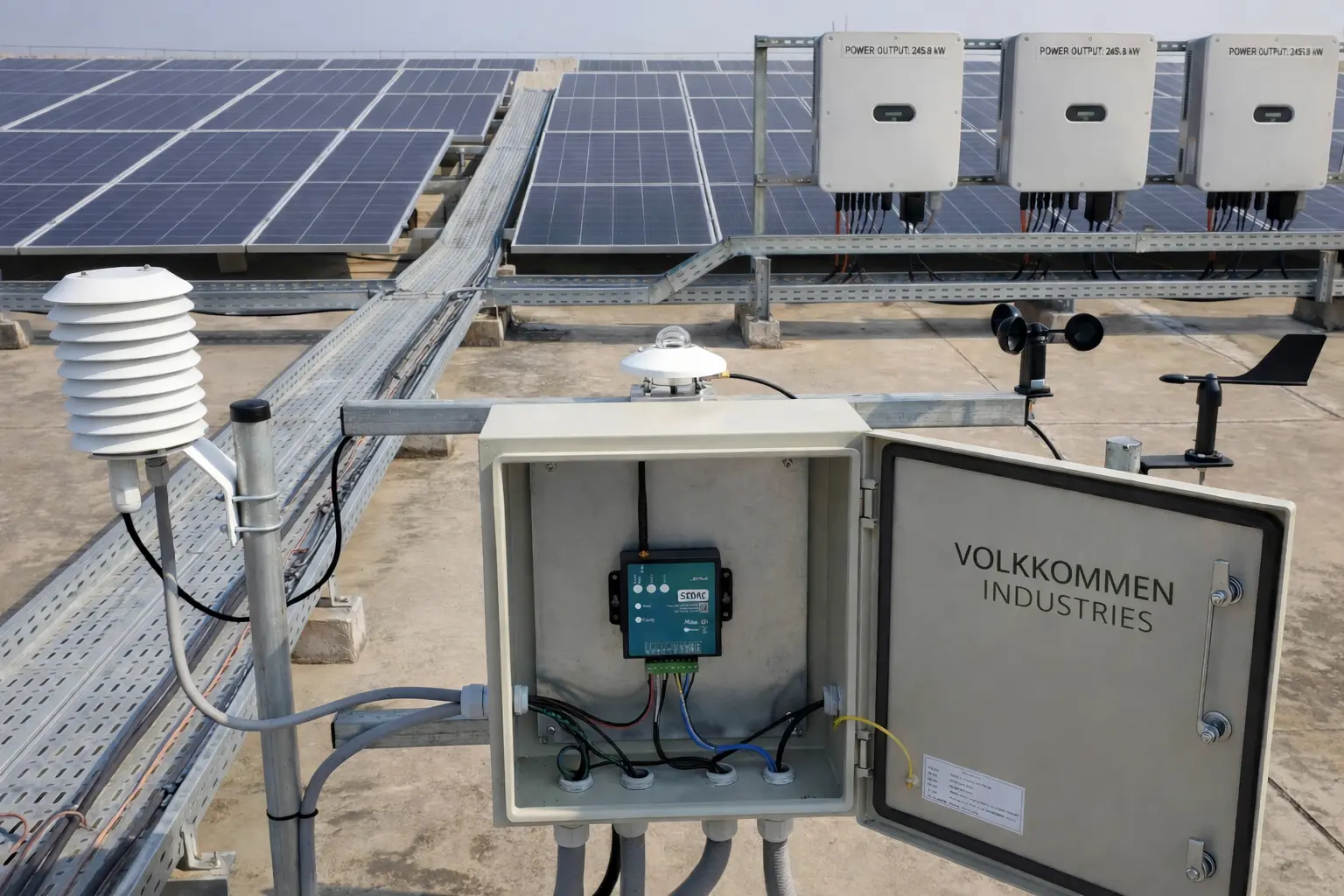
Volkkommen Industries implemented a comprehensive IoT-based Solar Energy Monitoring solution using the SEDAC Modbus to MQTT Gateway to integrate multiple RS485-enabled sensors and electrical systems into a unified monitoring platform. Environmental sensors for temperature, humidity, solar radiation, wind speed, and wind direction were interfaced directly with the SEDAC device using RS485 communication. In parallel, data from diesel generators and solar inverters was also acquired through Modbus communication, enabling complete visibility of both renewable generation and backup power systems. All collected data was securely transmitted to a centralized cloud platform, where a customized dashboard was developed to meet the client's operational requirements. The dashboard enabled: Real-time monitoring of all environmental and electrical parameters Clear visualization of solar performance alongside DG and inverter data Trend analysis to study the impact of environmental conditions on energy generation Configurable alerts for threshold violations and abnormal conditions Automated report generation with options to download data in Excel and PDF formats The solution was designed to be scalable, allowing future expansion with additional sensors or power assets without changes to the core architecture.
Key Results
The implementation delivered measurable improvements across operations, efficiency, and cost reduction:
The implementation delivered complete operational visibility across the solar plant, environmental conditions, and backup power systems from a single interface. The facility team could now monitor real-time data, respond quickly to abnormal conditions, and make informed decisions based on accurate, historical insights.
Key outcomes included:
Improved understanding of how temperature, humidity, and solar radiation affected energy generation
Faster response to system deviations through real-time alerts
Reduced manual effort in data tracking and reporting
Better coordination between solar generation, DG operation, and inverter performance
Enhanced ability to optimize energy usage and improve overall system reliability
Overall, the solution enabled smarter energy monitoring, improved operational efficiency, and better control over renewable and backup power systems within the multi-storey building.