
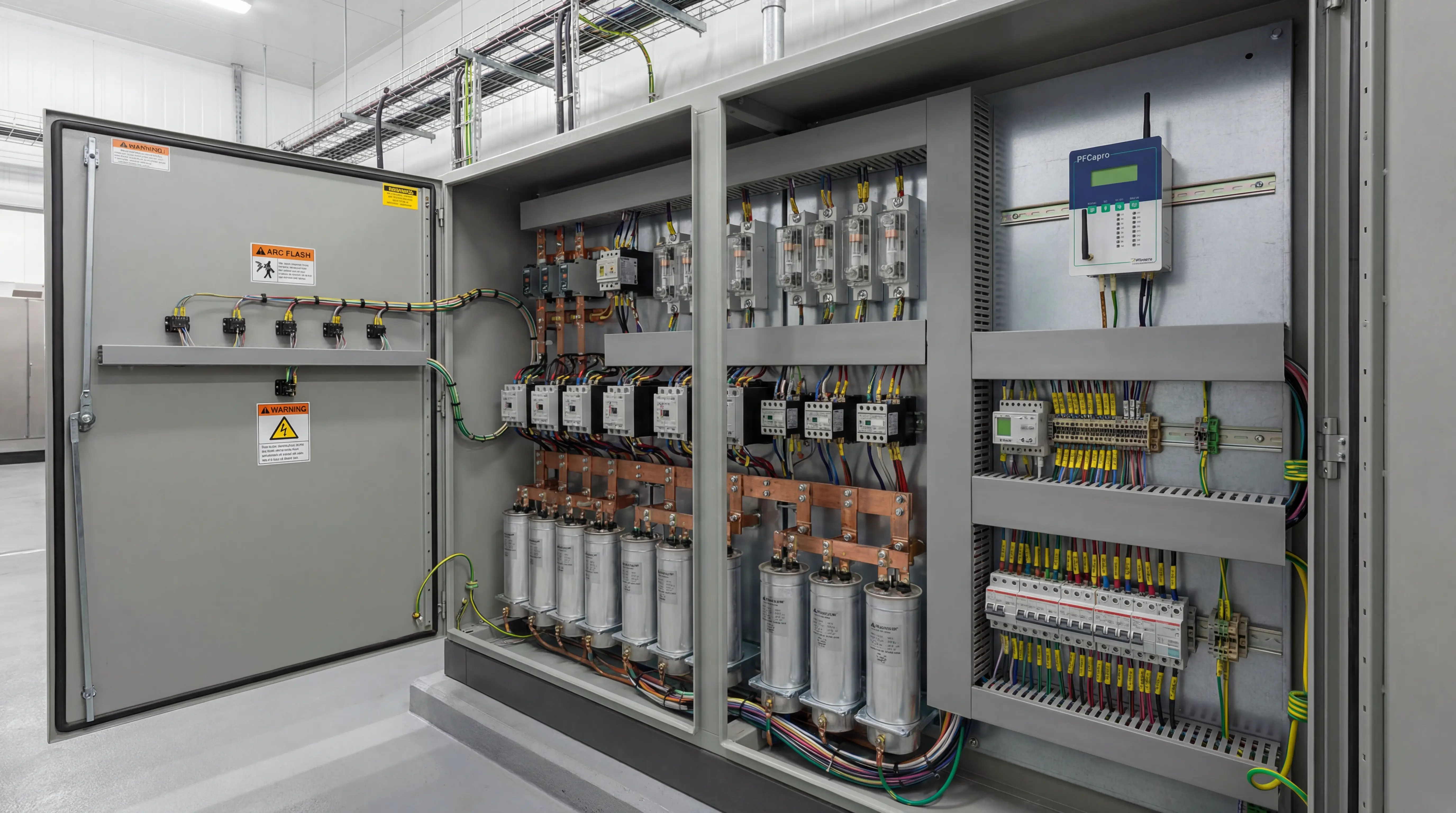
IoT-based capacitor bank monitoring and protection solution delivering real-time power factor visibility, alerts, and preventive insights for a food processing facility and connected supermarket.
The Challenge
The food processing plant and the connected supermarket operated multiple electrical loads including compressors, refrigeration systems, packaging machines, and HVAC equipment. Maintaining a healthy power factor and protecting electrical assets was critical to avoid utility penalties, overheating, and premature equipment failure. However, the existing capacitor bank operated without real-time monitoring, making it difficult to detect capacitor degradation, abnormal current flow, temperature rise, or protection failures. Issues such as unnoticed capacitor failures and imbalance could lead to poor power factor, increased energy costs, and stress on the electrical distribution system. The absence of alerts and historical data further limited the ability of maintenance teams to take preventive action or justify corrective measures.
Our Solution
Volkkommen Industries implemented a Capacitor Bank Monitoring & Protection Solution designed to provide continuous visibility into electrical health and performance. The solution monitored key parameters including voltage, current, reactive power, power factor, and temperature within the capacitor bank panel. Protective logic and threshold-based alerts were configured to immediately notify the maintenance team in case of abnormal conditions such as overcurrent, overheating, or capacitor failure. All data was made available through a centralized dashboard, enabling operators to track power factor trends, identify performance degradation early, and take timely corrective action to protect electrical assets and maintain compliance with utility requirements.
Key Results
The implementation delivered measurable improvements across operations, efficiency, and cost reduction:
The implementation resulted in stable power factor performance across both the food processing facility and the supermarket. Early detection of abnormal conditions reduced the risk of capacitor damage and unplanned downtime. Energy efficiency improved through consistent reactive power compensation, helping avoid utility penalties. The availability of historical and real-time data strengthened preventive maintenance practices and improved overall reliability of the electrical distribution system.